Episode 256 · Solo episode
Why I Moved From Kit to Flodesk - & Why This Isn't Really About Email Software
· 21 min listen · 4 min read
About this episode
After four years with Kit, I moved my entire email list to Flodesk, and I still love Kit. I explain why my business changed and my tools needed to change with it, the question I'd ask about every tool you pay for, and why simpler segments beat complex tags and automations. You'll also get my step-by-step migration process, including the DNS safety net and the first Flodesk email that landed a near 50% open rate.
The Email Growth Show
Grow your list without social media
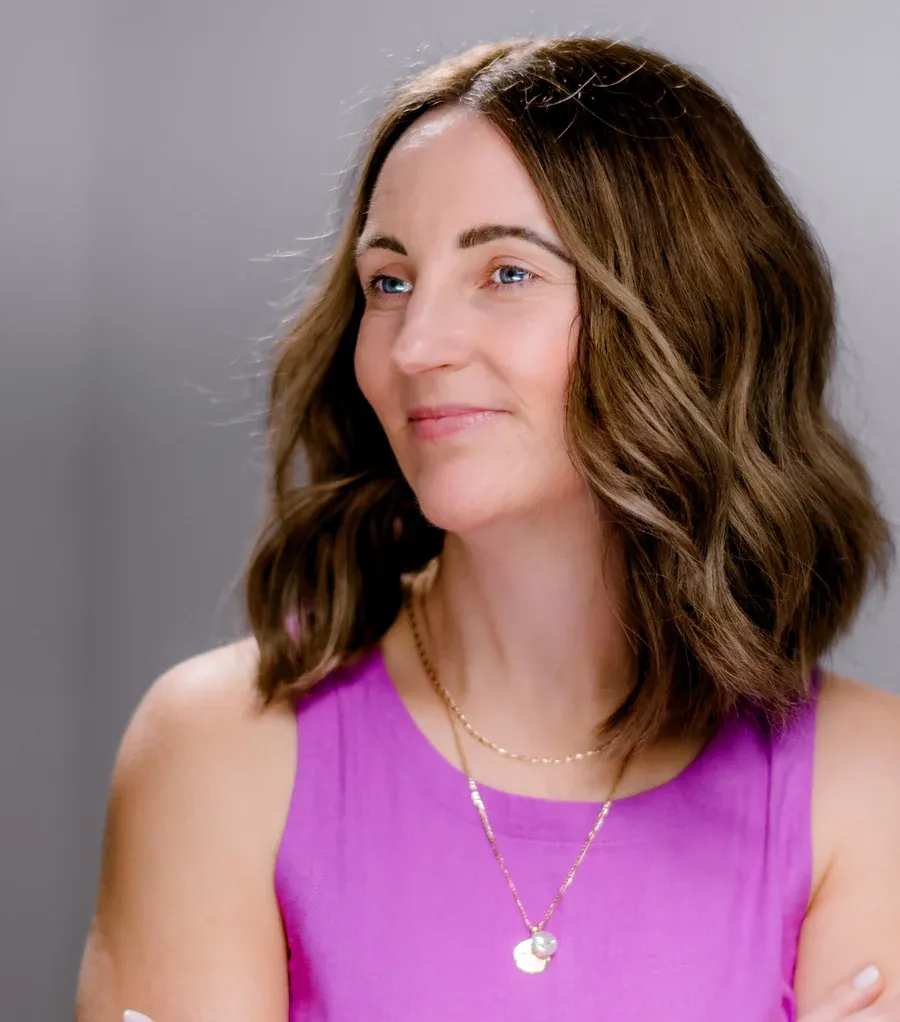
EP 256: Why I Moved From Kit to Flodesk - & Why This Isn't Really About Email Software
With Kylie Kelly
Listen to the episode
What you'll learn
- Why I left Kit for Flodesk after four years (and why I still recommend Kit)
- The one question to ask about every tool you pay for
- Why my complex tags and automations weren't making me a cent more, and the simple segments I use now
- My step-by-step migration process, including the DNS safety net and the first email that got a near 50% open rate
Links mentioned
- Flodesk · affiliate link
- Kit · affiliate link
- Email Marketing Skool, my free community
After four years, thousands of subscribers and hundreds of emails, I moved my entire email list from Kit to Flodesk. And I still love Kit.
That decision surprised a lot of people, and my inbox filled up with questions.
So in this episode I'm sharing why I made the switch, the question I think every business owner should ask about their tools, and exactly how I migrated my list without hurting my deliverability or the trust I've built with my subscribers.
Why I moved my email list from Kit to Flodesk
I was with Kit for four years. I built forms, funnels and branching sequences in there, and I recommended it to anyone who would listen. I still do.
But my business looks very different to the one I was running a few years ago. A heavy personal season meant something had to give, so I've shifted my focus to low-ticket offers, digital products, community and interactive tools.
That shift changes the maths. My Kit renewal came up at around $1,200, which isn't an outrageous number. If your software helps you bring in tens of thousands of dollars, it's fantastic value. But I'm aiming to pass 10,000 subscribers by the end of the year, and a bigger list means a bigger bill. When you're selling low-ticket products, that cost lands differently.
I already had an old Flodesk account with unlimited subscribers for around US$35 a month. No cap, however big the list gets. For this season of my business, it made sense.
Does this tool still fit the season you're in?
Here's the lesson I want you to take from this, even if you never touch your email platform: the tools that got you here won't always be the tools that get you there.
We get attached to our tools. We stay because we've always used them, because changing feels hard, because we're worried we'll regret it. I was honestly embarrassed to switch. I'd talked about Kit until I was blue in the face. For a while I didn't even want to say where I was going.
Migrating is a pain. Nobody wakes up excited to rebuild their forms and update their DNS records. But staying with something that no longer fits costs you too, financially, emotionally and energetically.
"If I was starting my business today, would I make the same decision again?"
Ask that about every tool you pay for, based on the business you're running right now. If the answer is no, it might be time to explore something different.
And if you're wondering whether you should leave Kit too: not necessarily. If your business runs on funnels, segmentation, evergreen products or detailed customer journeys, Kit is brilliant and I'll keep recommending it. There's no single best email service provider. There's only the platform that best supports your business right now.
Why simpler email systems are more powerful
If you'd peeked inside my Kit account, you'd have found tags, automations, funnels and branching sequences everywhere. If someone clicked this, they got that. I genuinely loved building it.
But I wasn't using most of it. I could see exactly how many people joined from a summit two years ago, and that information never once changed a decision I made. I'd have made the same revenue last year whether those people were tagged or not.
The complexity felt productive. It made my business feel more legit. Mostly it was noise. Simpler systems win because you can actually use them consistently without feeling overwhelmed.
So in Flodesk I kept my segments deliberately broad: events, lead magnets and paid products. I only care about one thing there: how many people on my list are buyers, and how many are still just subscribers. The real job of your email list is moving more people into that buyer bucket.
How to switch email service providers without hurting your deliverability
Moving platforms takes method and patience. Here's the order I followed.
- Decide on your segments first. Look at your old tags and ask whether each one still needs to exist.
- Rebuild only the workflows you still need. Not every automation deserves to come with you.
- Rebuild your forms and landing pages, then re-embed any website forms that pointed to your old platform.
- Test everything. Every form, every workflow, every automation, before a single subscriber moves.
- Import your subscribers. Treat it as a chance to clean house.
- Send a final email from your old platform. Tell people exactly what's happening, the date and time your next email will arrive, and ask them to open, click and reply.
I turned that first new email into a giveaway: click to grab a free gift, reply to go in the draw for a seven-day coaching package. I'm totally fine bribing people to do the thing I need them to do, because that first send tells the inbox providers it's still you and people still want to hear from you.
For my techy friends: I left Kit's authentication on my DNS and added Flodesk's alongside it. One SPF record with Flodesk added to it (you only ever want one), one unchanged DMARC record, and two DKIM records, one for each platform. That second DKIM was my safety net while I transitioned.
Normally I'd warm up a new account in small batches, a few hundred of your most engaged subscribers at a time. But when I checked my data, around 4,500 subscribers had opened or clicked in the previous 14 days and there were no cold subscribers, so I sent to everyone at once. That first Flodesk email landed a near 50% open rate, a 4% click rate and close to 75 replies from people saying hello and cheering me on.
Behind every subscriber number is a human who trusted you with their email address. Protecting that trust is what a good migration is really for.
your next step...
Come talk email with us
Thinking about switching platforms, or just want your emails landing in the inbox? Bring your questions into Email Marketing Skool, my free community for women growing their list without social media.
Join for free →Read the full transcript
00:00I recently made a business decision that surprised a lot of people. I moved my entire email list from Kit to Flodesk. After four years with Kit, thousands of subscribers, hundreds of emails, lots of history. And honestly, I did not make this decision because I suddenly hate Kit. I still really love Kit. I actually made it because my business has changed. My priorities have changed. And I think one of the most important things that we can do as business owners is regularly ask ourselves, "Does this still fit the season I am in?" That is what we're going to be talking about today. Are you a female business owner frustrated with battling the algorithm and looking for growth strategies that don't involve awkwardly pointing or dancing online or throwing cash at paid ads? Welcome to The Email Growth Show. I'm your host, Kylie Kelly, visibility and email marketing strategist. I grew my email list from zero to almost 10,000 subscribers in less than two years, and the same is possible for you, too.
01:00Are you ready to build your email list and start making more money in your online business? Let's head into today's episode. Hey, hey. Welcome back to The Email Growth Show. I am so glad you are here, my loves. Today we're talking about something that has generated a lot of questions in my world over the last week or so. I have moved my email list from Kit to Flodesk. And before anyone panics, this is not a Kit versus Flodesk episode. This is not me telling everyone to move providers. This is not me saying that one platform is better than another. I actually still wholeheartedly love and recommend Kit all the time. I think it's an incredible platform. But I think this is a really important conversation because it highlights something much bigger than email service providers. Sometimes your business changes, and when your business changes, your tools might need to change, too. Now, this isn't really about email software. It's about my business. It's about my life. It's about the season that I'm in, because my business today looks very different to the business that I was running a few years ago.
02:00Anyone that is on the inside, that's a part of my world, might know that I've had some stuff going on in my personal life. And so when personal seasons feel heavy, when they feel like they are a lot to hold, something has to give. Something has to change. So I made a decision at the start of the year that I was going to pivot my business a little bit, pivot what I'm offering in my business a little bit. So in line with that, my two incredible masterminds are coming to an end for 2026. The Empress Mastermind has just wrapped as of a couple of days ago, and my Headliner Mastermind is going to be sunsetting at the end of August. Now, that's an emotional thing for me because I absolutely adore the women that are inside of it, and I have loved serving them with my whole entire heart. And look, the masterminds might come back in 2027, but I know for right now I needed to press pause. So they are closing. [00:03:00] I still have a few one-on-one clients that I'm absolutely keeping. I am still thinking of running my four-week sprints. I still love those shorter implementation offers. And of course, there's going to be a few done-for-you projects that pop up here and there for cash flow. To be completely honest, if I need some revenue, I'll be offering some done-for-you work. But the majority of the work that I want to focus on for the rest of this year is looking very different. I'm leaning heavily into low-ticket offers, digital products, community, interactive tools, and creating a more scalable, sustainable business. And because of that, my focus has shifted. I need to grow my email list even bigger, and I need to do it as quickly as possible. And when your business model changes, your numbers start to matter differently. Your expenses matter differently, and the margins and the profit that you're making also matter differently. So at the end of June I knew that my Kit renewal was coming up, and it was around $1,200. [00:04:00] Now, I want to be really clear here: that's not an outrageous amount of money. If the software is helping you generate tens of thousands or hundreds of thousands of dollars, it's fantastic value. It's a no-brainer. And honestly, for many businesses, it absolutely is. This is not me saying that that is too expensive. This is me saying that it made me stop and think because of the season that I am in. I had to look at my plans for the next six months and really just ask myself, "Does this still make sense for the business that I'm building now?" Not, did this make sense three years ago? Not, will this make sense in two years? But right now, does this make sense? And the answer for me was not really. And really, it wasn't even about the $1,200. It's because my goal is to grow my email list significantly. I want to be over 10,000 subscribers by the end of the year, and I am on track to do that, but with that come higher rates. [00:05:00] That means my Kit subscription will be even more than $1,200. And when you're selling a low-ticket product, suddenly it doesn't make as much sense as it does when you have high-ticket masterminds. So why am I sharing all of this? I want you to think about the fact that the tools that got you here aren't always the tools that'll get you there. I think this is a lesson we don't talk about enough. Sometimes we do outgrow things. Sometimes we need more complexity, and sometimes we need less. But as business owners, I think we can be really attached to our tools. We stay because we've always used them, because changing feels hard. Maybe we're worried that we'll regret it. Honestly, I was embarrassed to be changing. I loved Kit. I love Kit still. I talked about them until I was blue in the face. I love the data and the analytics and the way that it works. I was a big Kit fan, and Flodesk has some limitations, and I've been vocal about that as well. So to be completely honest, when I said, "Hey, I'm changing email service providers," [00:06:00] I kind of didn't want to say where I was going, which is ridiculous. But again, we get attached to our tools. We get attached to what we know. And that is normal. It is normal to have all of those thoughts and feelings. And to be completely honest, migrating tools is a pain in the a*s. It is annoying, it is not fun. We never wake up thinking, "You know what sounds fun today? Rebuilding my forms and updating my DNS records." No one thinks that. But sometimes we have to make decisions that support the business that we're building next and the season of life that we are in, not the business that we have had in the past. So looking forward to the business that I am building now, I don't need everything anymore. If you look into my Kit account, you will see that I kind of loved the complexity. I had tags and automations and funnels and branching sequences. If someone clicked this, they got that. If they bought this, they got something else. I genuinely enjoyed building all of that.
07:00But over time, I realised that I wasn't really using a lot of it anymore. My business over the years has become really simple. It's purely relationship-led, purely community-driven, more human, and I didn't need all of that data. It's so funny, because when you look back you're like, "Oh, I can see how many people subscribed to my email list from this specific bundle, or this specific summit, or this lead magnet that I had two years ago." Great, Kylie. But how is that actually useful? I wasn't actually using any of that data, which means it was just creating a little bit of noise and chaos behind the scenes, and it didn't need to be there. It gets to be simple, and so I wanted my systems to reflect that. And look, if I think about it, the reason it got so complex behind the scenes in Kit is probably because it felt productive. It felt productive creating tags and knowing all of this data, and it almost made it feel like my business was more legit, like I was running a proper business. But it doesn't always need to be there. If I think about the revenue that I made [00:08:00] last year, I would've made the same amount whether people were tagged or not. It made no difference to the income that I was making. So I think simpler systems are actually more powerful, because you can use them consistently, because you can keep them simple, because you're not overwhelmed. So I'm excited to step into this simple email service provider era. So let's talk about why Flodesk. Flodesk made sense for me because I wanted a lower monthly expense, and I actually already had an account from a couple of years ago that has unlimited subscribers. So I'm paying about 35 US dollars a month, and I'm not capped on how many people are on my list. Reflecting on the goal that I have for the end of the year, that makes a big difference when we're comparing $35 a month to whatever Kit would've been once I got to 10K subscribers and over. So it's definitely a lower expense for me. And it is a lot simpler. It does match this season of business. Sure, it doesn't have everything that I want, but I was able to [00:09:00] recreate the forms that I needed. I was able to recreate a simple text-only email. I don't do flashy emails, and I did not want to send any of those really designery emails that Flodesk is kind of known for. I didn't want to use it that way. The fanciest thing you'll probably see in my emails is a four-by-four footer, which I want to create and start using. But other than that, it's the same email format that I was sending out in Kit, which was really important to me. I want it to be more about the connection and the words I'm using rather than pretty colours. So I was able to recreate a template that reflected what I've been sending, which I do think is important to think about. Whilst we can change what we send, whilst we can update our branding and make things fun and interesting, we are building trust with these people on our list. And if we change it too often, they don't know what to expect as much. It does actually impact the level of trust that we're building. So it was really important to me that I could rebuild that simple text-only email from Kit in the new [00:10:00] platform as well. Now, I also want to caveat this whole conversation with the fact that I still recommend Kit, because I know some of you listening might be thinking, "Oh my gosh, should I move as well?" Not necessarily. If you have funnels and automations and segmentation and lots of evergreen products, if you have a course business or a business that relies on customer journeys, Kit is fantastic. I will still be recommending it all of the time. And if you have a smaller list, or you don't need to think about the expense piece, then don't go anywhere. Kit is definitely the provider of choice for me. This is not "everybody should move to Flodesk." This is simply "this made sense for me right now." Honestly, there is no best email service provider. There is only the platform that best supports your business right now. They all do the same thing. They all send emails. That's the thing that we're focusing on: building that relationship with our email subscribers. They can all send emails, land in that inbox and build the relationship.
11:00You just need to think about which platform best supports your business right now. I also want to walk you through what I did when I migrated my accounts, because I know some of you might be thinking about making a move yourself. Or even if you're not right now, there are some things that I did that made a big difference in how successful this migration was. Now, I will say, moving email service providers isn't difficult. It's just methodical. I didn't wake up one morning, export my list, send an email and hope for the best. I did have to plan it. I did have to be thoughtful and intentional about it. So the first thing I did was think about my segments. I reviewed Flodesk and reminded myself how it worked, and then I thought, "What segments do I actually need? What makes sense in this new platform?" I looked at the tags that I had in Kit and thought, "Do any of these actually still need to exist?" What I decided to do with the segments in Flodesk was make them super broad.
12:00So I have a segment for events. Not this specific bundle or this specific summit, just events. I have a segment for lead magnets. Doesn't matter which one it is, it's just lead magnets. I have one for paid products. Again, doesn't matter which one, it's just paid products. The reason I've kept the segments really broad is because I want to see how many people on my list are actually buyers and how many are still just subscribers. That's the most important metric we can be aware of when it comes to our email list. How many people have actually bought from us before? And that is the main thing we should be focusing on: how can I move more of these subscribers over into the buyer bucket? We are a business, after all. This is what we should be thinking about. So when I created the segments, that was my intention. After I'd done that, I thought about my workflows. Not every workflow that I created in Kit, but which ones do I still need? Then I rebuilt [00:13:00] them in Flodesk in the Workflows function. Then I thought about my forms and my landing pages. Which forms had I built in Kit? Now, I've got some in ThriveCart and some were in Kit. So I looked at the ones in Kit and rebuilt them over in Flodesk. I looked at the ones I had embedded on my website that linked to Kit, rebuilt them in Flodesk, and then embedded them on my website again. So it all needed to be rebuilt, but the point I'm getting across is that I did it in stages, and then I tested all of it. Every form, every automation, every workflow. I wanted to know that everything worked before I moved anyone over. After I'd tested everything, I imported all of my subscribers. And honestly, the whole process became a really good opportunity to clean house, because I think we all have those things in our businesses that we've forgotten about. Forms that we no longer use, automations we no longer need, old systems just hanging around like clutter in the bottom drawer of your kitchen.
14:00Moving platforms forced me to ask:myself, "Do I actually need this?" And that question alone was incredibly valuable. So once everything was set up, I'd done all of the tidying and moved everything over, I sent one final email from Kit. I explained exactly what was happening. I told people, "Hey, I'm moving email service providers. You're going to receive your next email from a new platform." I gave them the exact date and time I was sending the email, and I asked them, "Please open the email. Please click the links. Reply." And then I even turned it into a giveaway. I am totally okay with bribing people to do the thing that I need them to do. So I said, "I'm going to have a free gift for you. You're going to click to get the free gift. If you reply, you're going to go into a giveaway for a seven-day coaching package." I needed to entice them to engage, because that first email from Flodesk is so important. It tells the email gods that I'm still legit, that it's still me, and that people still want to receive my emails.
15:00That engagement is key.:It matters a hell of a lot. And then I also took my time with the authentication. Now, if you are not into the techie side of email, just skip forward 30 seconds. You probably don't need to know this, and I don't want to overwhelm you. But for those who want to know: I left Kit's authentication on my DNS in place, and I just added the Flodesk authentication. So at this point, I had one SPF record. Remember, we only ever want one on our DNS. So I just added Flodesk into the one that I had. We only ever need one DMARC record, and that wasn't really affected by the migration, so that stayed the same. But then I had two DKIM records: one for Kit and one for Flodesk. Why? Because I wanted to give myself a safety net as I transitioned over. This is the thing about migrating email service providers. When we change providers, it really isn't about moving subscribers. It's about protecting the trust that we've built. Every single person on my email [00:16:00] list has trusted me with their email address, and I wanted to make sure that the transition felt seamless for them. This is why protecting your deliverability matters. So I added Flodesk and made sure we were good to go before I sent that first email out of Flodesk. Now, originally I was planning to warm up the account in small batches. When you have a large email list and you're moving, that is best practice. Warm up in small batches. A few hundred people at a time, starting with the most engaged. That is usually what I would recommend. But when I looked at my data, almost everyone on my list had opened or clicked an email in the previous 14 days. 4,500 of them were incredibly engaged. There were no cold subscribers. So I made the decision to just send to everyone at once. And thankfully, everything went beautifully. That first email that went out on the 1st of July has nearly a 50% open rate, like normal. It's got a 4% click rate. [00:17:00] I've had close to 75 replies and entries into the giveaway. People saying hello, cheering me on, excited to hear from me. And honestly, it was a lovely reminder that behind every subscriber number is a human being, somebody that's cheering me on, which was just so lovely to receive. I think the real lesson from all of this, and what I want to leave you with, is that we often delay making changes because we're scared of the inconvenience. Changing software is inconvenient. Learning something new is inconvenient. Rebuilding forms and workflows and all of the behind the scenes is really boring and inconvenient. But staying with something that no longer fits can also be really expensive: financially, emotionally, even energetically. And I think we owe it to ourselves to regularly ask the question, "If I was starting my business today, would I make the same decision again? Does this still make sense?" And if the answer is no, it might be [00:18:00] time to explore something different. So I didn't leave Kit because Kit is bad. I left because my business looks different than it did a few years ago. My priorities are different, my offers are different, my goals are different. And one of the most valuable things we can do as business owners is build businesses and choose tools that support the season we are in. Because loyalty to a tool is not a strategy. Alignment is. Choosing what feels aligned. And right now, for me, Flodesk feels really aligned. I will keep you updated on how it goes. If you have any questions, feel free to send me an email. You know I love hearing from you, and I am an open book with all of this stuff. So that is the tea. That is all from me this week. I hope you found that interesting. If you're thinking about migrating email service providers and this has helped you, I would love to hear from you. But for now, that is all from me. I will be in your ears again next week. We are in the middle of school holiday chaos, so wish me luck. [00:19:00] But as always, the podcast will be ready for you on Friday morning. All right. I love you loads, and I will see you next week. Bye for now. Thank you so much for tuning in to this episode of The Email Growth Show. I hope you found valuable insights into the next steps you can take to grow your email list and boost your business without relying on social media or paid ads. If you enjoyed this episode, please take a moment to rate and review the show and share it with others. Your feedback helps me reach more female entrepreneurs just like you who are ready to say goodbye to social media and leverage email marketing to grow their business and make a bigger impact. Thank you so much for listening, and I'll see you in the next episode.
Free · for every new episode
Grab the one sheet takeaways.
Podcasts are so easy to listen to and so much harder to act on afterwards. So every new episode gets its own cheat sheet: one page, with the key points, ready for when you finally sit down to do the thing.
More to listen to
The Email Growth Show
Grow your list without social media
EP 253: Your Email Platform Can Now Talk to AI (And Most People Are Missing the Real Opportunity)
With Kylie Kelly
The Email Growth Show
Grow your list without social media

EP 180: Will Apple Mail Ruin Your Open Rates? The Truth About AI Summaries
With Kylie Kelly
This Mama Means Business
EP 98: 3 Ways I'm Using Ai To Save Time In My Business & Email Marketing
With Kylie Kelly
Listener questions
Got a question for the show?
Record it in your own voice. I may answer it on a future episode.